
 Lessons: 16Length: 1.1 hours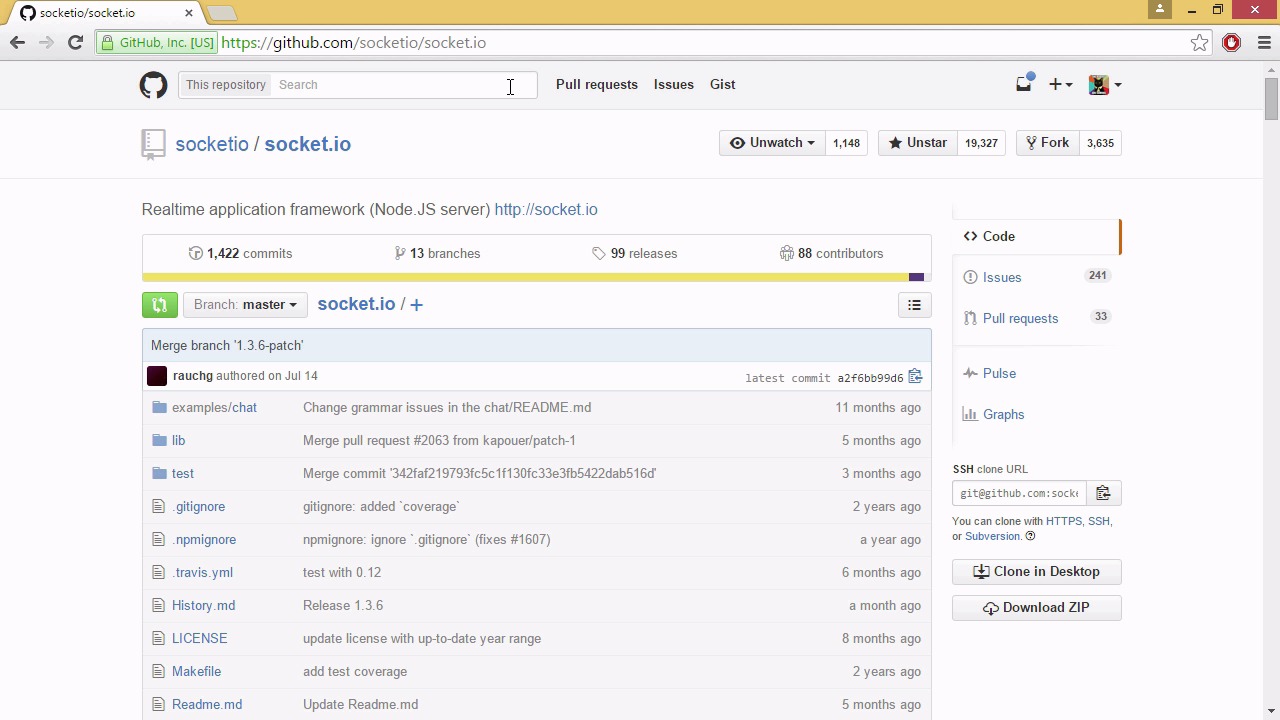
- Overview
- Transcript
5.1 Conclusion
Congratulations on completing this course on WebSockets and Socket.IO. In this lesson, I’ll review what we’ve learned and show you some resources you can use to further your knowledge of WebSockets.
Related Links
1.Introducing WebSockets and Socket.IO
1.1Introduction01:23
1.2What Are WebSockets?04:43
2.Scaffolding a Socket.IO Application
2.1Installing Node.js and App Dependencies02:59
2.2Creating an Express Server04:35
2.3Adding WebSockets to the Back-End03:00
2.4Connecting the Front-End Application to Socket.IO04:47
3.Building the Front-End Application
3.1Receiving Socket.IO Events03:20
3.2Displaying Messages06:22
3.3Creating Messages and Updating Collections07:50
3.4Displaying Likes02:31
3.5Providing Users With Unique Ids03:41
3.6Updating Like Counts05:03
3.7Propagating Like Counts to Connected Users04:12
4.Completing the Application
4.1Adding Moment.js04:13
4.2Adding Styles03:09
5.Conclusion
5.1Conclusion05:52
5.1 Conclusion
Okay then, here we are. We've gotten to the end of our series of videos on the topic of WebSockets. Wow, haven't we just learned a ton? In this video, let's review what we've learned. So as we've seen, WebSockets are simple and easy to implement. It only took us about ten or 15 minutes to actually get them installed. As long as you already have node.js set up, they work. One small note. You might be able to get Socket.io working easily on your computer, but if you have a normal or mainstream Internet service host who hosts your web site, they might not support Socket.io. In fact, even modern guys like Node.js or Hiroko only kind of support Socket.io some of the time. So you have to keep this in mind when you're thinking about your deployment step. We also learned that it's straight forward to kind of serve up our Socket.io by leveraging the Express knowledge we already have, so we just basically plug it into Express and then you're not spending anymore time thinking about sockets. Think about it. How much time do we actually spend communicating between sockets? All we did was send messages and the rest was handled well automagically and lastly, we saw with our own eyes how well WebSockets is suited to interactivity. With only a bit of time and a novices understanding of programming, we built an application that let's two users and two different browsers interact in real time. That's very next level. So if you're considering what should you learn next. Do consider WebSockets. WebSockets is a technology that is not totally huge now. But it's way on the way up. And most importantly you can just build apps that are better. So if you master WebSockets and you know you need to compete with the rival company who's still using PHP or something, the end user is probably going perceive your app as better. Cuz it's gonna be faster and easier to use. All right, so if you want to continue your learning here are some strategies for what you can do. Here I am at Socket IO GitHub page at github.com/socketio/socket.io. As you can see they have a lot of stars they're doing pretty okay. If you want to show that you're interested in this library, you can star it. Now if you want to receive the most up to date cutting knowledge of what's happening in the the Socket.io library you can watch it. But be warned you'll receive email notifications every time something changes and this is an active library so things change perhaps dozens of times a day. Now if you have a problem that kind of goes beyond what stack overflow can help you with then. You can raise an issue on this GitHub page. It's an effective way of taking your problem to the source, although they already have 241 issues to deal with, so it might take a minute. Now as great as this course is, every time you watch it, the contents will be the exact same. If you want some new information on Sockets.io every week, try checking out Node Weekly. So here I am at nodeweekly.com. As you can see, it's a big week for Node Weekly. This is the week they released their 100th issue. So Node Weekly is part of the weekly family of Newsletters curated by Peter Cooper. And I like them all. My personal favorite is JavaScript weekly but for Socketeye information, Node Weekly is probably the most relevent. So if you subscribe they'll send you this list every week. But as you can see even just now we can see some performance tweaks from Express, something to do with Cobol. Not too much on Socket.io right off the top. But if you dig a little bit deeper surely you can find something useful. And finally for the truly not faint of heart, here is the MDN page for the WebSocket spec. Now throughout this tutorial, we used Socket.io and glazed over WebSockets themselves. WebSockets are a complicated and, some might say, difficult to implement spec that allows browsers to communicate with servers. The browsers like Chrome have implemented this spec, and us as developers now need to leverage that. Without Socket.io we would have to write this all ourself. And for the purpose of this series of videos, that simply would not have done. However, if you want to write your own WebSocket implementation, maybe one that's bigger and better than Socket.IO ever was, you can. And this is where to start. So we didn't actually talk about the implementation details of WebSockets themselves but this is where you can go to check it out. So it has been quite and outstanding series of videos. I would just like to thank you for watching this web course til the end. WebSockets are pretty complicated and writing. JavaScript code isn't too easy either. By getting to the end, you've shown me that you're more determined, more curious, more technologically savvy than 99% of the people out there. I'm 100% convinced that if all you do is continue on the path you're going now, whether it's learning new technologies, or getting geared up to enter the field as a developer, a full stack software engineer, you will succeed. Just keep going, continue learning, and apply your learning wherever you can. From everyone here at Tutsplus I'm Daniel Stern. Have a good day.


