
 Lessons: 14Length: 1.5 hours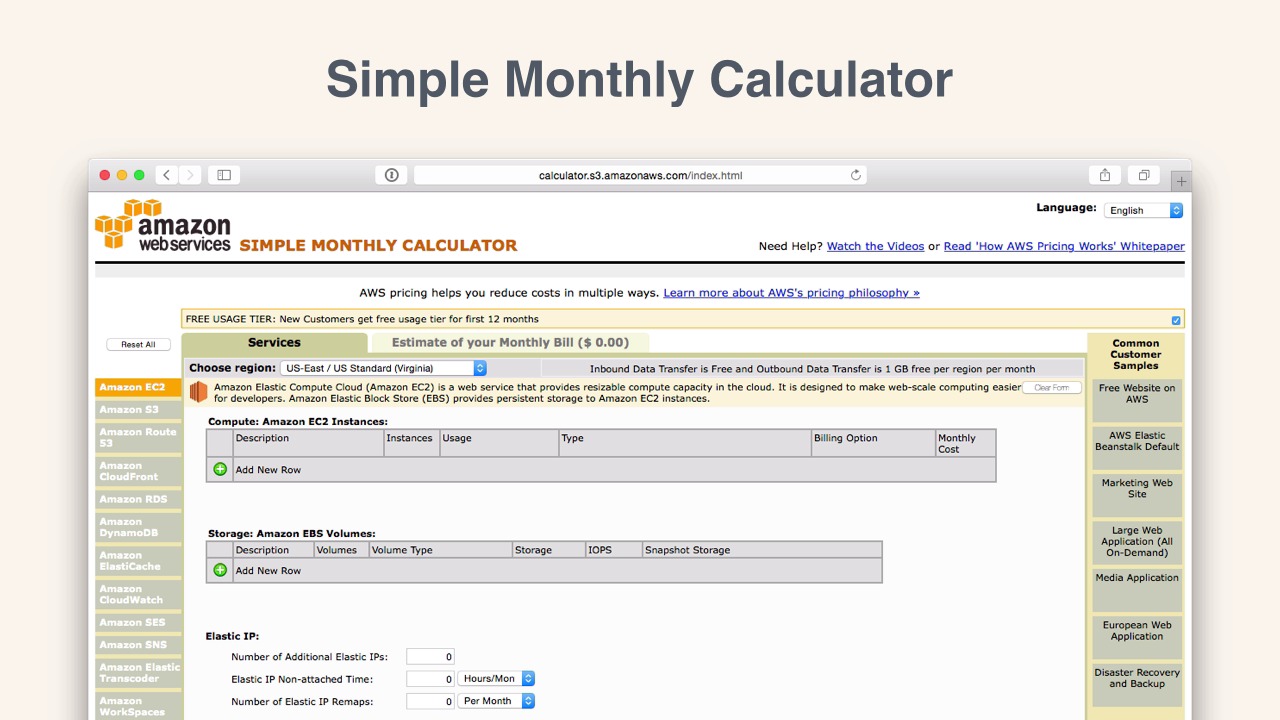
- Overview
- Transcript
3.1 Conclusion
There’s much more that remains to be explored in Amazon Web Services, but this course has got you up to speed on all of the most important features. Thanks for watching, from all of us here at Tuts+.
Related Links
1.Introduction
1.1Introduction01:25
1.2AWS Console Overview04:26
1.3IAM: Identity and Access Management07:24
2.Amazon Web Services
2.1EC2: Amazon's Virtual Servers09:31
2.2EC2 Container Services: Docker on Amazon07:36
2.3Lambda: Event-Based Code Execution13:33
2.4SQS: Message Queues06:10
2.5SNS: Push Notifications05:37
2.6DynamoDB: A NoSQL Data Store07:17
2.7SES: Email Delivery08:42
2.8CloudFront: Content Distribution07:20
2.9Route 53: DNS Servers06:51
2.10Other Services05:02
3.Conclusion
3.1Conclusion01:25
3.1 Conclusion
This is it. You have seen a lot of different Amazon web services in this course, and hopefully you can use them in one of your own projects. I have two additional resources before I let you go. One is the AWS Blog, especially the Compute Blog. It is updated very frequently with new, in-depth posts about different services like Lambda where it provides very good examples, including the source code, for you to try out yourself. The second one is the Simple Monthly Calculator, a very handy Web tool to plan your AWS usage costs. As always, feel free to contact me on Twitter, if you have any further questions, or want to know more about the specific topic I covered. If you have questions regarding the source code of this course, please also make sure to send me a tweet, as I might sometimes miss GitHub issues notifications. Thank you for watching this course from all of us here at Tuts+. We hope you enjoyed and learned something from it, see you next time.


